%20(2)_edited_edited.png)
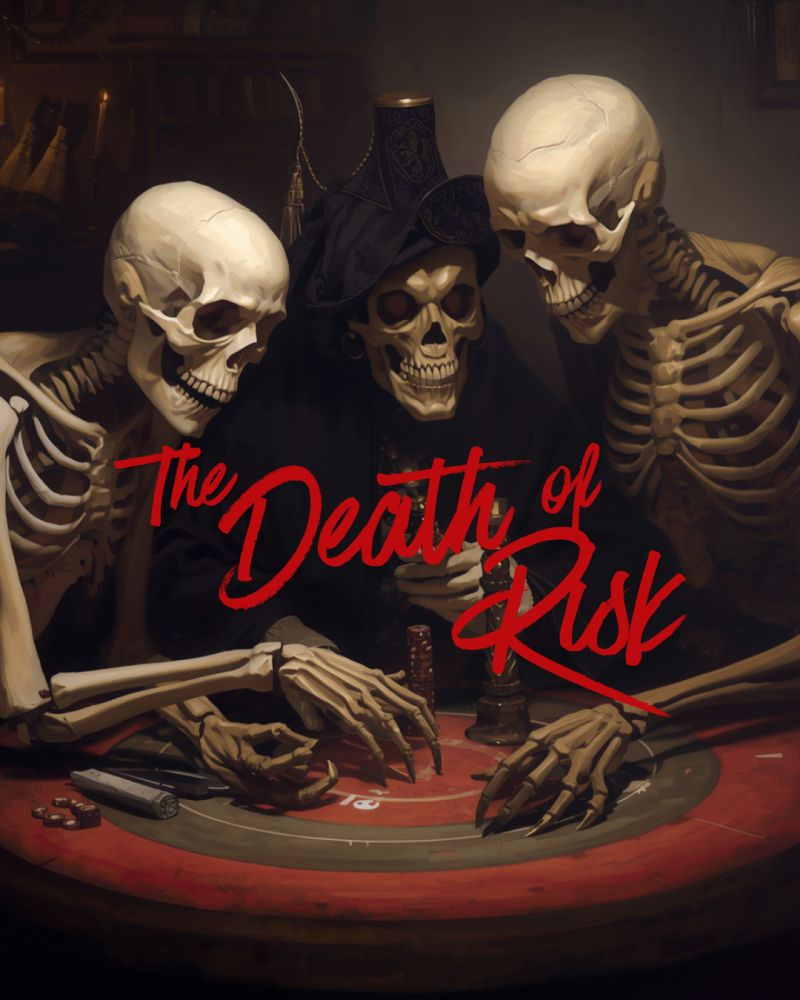
The Death of Risk

At some point, risk stopped being something we learned to manage…
and became something we tried to eliminate.
If you listen to Mike Rowe, he talks about the “death of risk” in the workforce.
But what if it’s already happening in athletic training education?
We say we’re preparing healthcare professionals.
But are we actually giving them space to make decisions… and be wrong?
Because that’s where clinical judgment is built.
➡️ Not in perfect simulations
➡️ Not in controlled checklists
➡️ Not in fear of evaluation
But in real moments where:
The call isn’t obvious
The outcome isn’t guaranteed
And the student has to own the decision
Somewhere along the way, education shifted:
From developing decision-makers
➡️ To producing error-averse practitioners
From guided autonomy
➡️ To over-supervision
From learning through consequence
➡️ To avoiding consequence altogether
And here’s the problem:
If students never experience manageable risk in training…
Where exactly are they supposed to learn it?
Because when they get into real settings, the environment doesn’t slow down.
There’s no rubric on the sideline.
No tap out in a critical moment.
Just a decision—and responsibility attached to it.
We talk a lot about confidence gaps in young professionals.
But confidence isn’t taught.
It’s built through:
✔️ Reps
✔️ Mistakes
✔️ Adjustments
✔️ Reflections
Take that away, and you don’t create safer clinicians.
You create hesitant ones.
Or worse—clinicians who rely on protocols but can’t adapt when the situation falls outside of them.
This isn’t about being reckless.
It’s about asking a hard question:
👉 Do we actually design athletic training education to develop decision-making under uncertainty…or to avoid discomfort during the learning process?
Because those are not the same thing.
Risk isn’t the enemy.
Unprepared clinicians are.
And you don’t fix that by removing risk from education.
You fix it by teaching people how to navigate it.
Do we give our students room to be wrong?
Or are we unintentionally training that out of them?


Comments